Monday, March 28, 2011

Mollusk Discovery

Scallops ():

(picture by Augsburg.edu)
 The common name is Bay Scallop and the scientific name is Aequipecten irradians.

Taxonomy
Kingdom: Animalia
Phylum: Mollusca
Class: Bivalve
Order: Anisomyaria
Family: Pectinidae

Video
Link (:
This is a link to a vidoe showing a scallops swimming.
Characteristics
There are 300 different species of scallops in the ocean worldwide.One "cool" charateristtic of the bay scallop is that they have sixty eyes along the edge of their mantle to detect motion.  Also if one of their eyes was to be injured or lost, they can easily regrow it.
(picture taken by Augsburg.edu)
 This is a close up picture of the eyes on the scallop's mantle.

(picture by Augsburg.edu)
Another neat picture of the scallops's eyes. Although these eyes may not produce a clear image, they are quick on detecting motion.
(Picture by mywfc.com)
The second "cool" characteristic about the scallop is that they have the ablility to swim. This is an unusual trait since most bivalve's lack this trait. They use this triat to propel themsevles away from their predators.

Tuesday, March 15, 2011

Crustaceans and Echinoderms

Crustaceans

Clawed Lobsters
Kingdom:Animalia
Phylum:Arthropoda
Subphylum:Crustacea
Class:Malacostraca
Order:Decapoda
Infraorder:Astacidea
Family:Nephropidae


Hermit Crab

  • Their skeleton is on the outside which is known as their exoskeleton.
  • They are bilateral symmetry, which means both sides are the same.
  • Also crustaceans have segmented appendages (legs).
Echinoderms
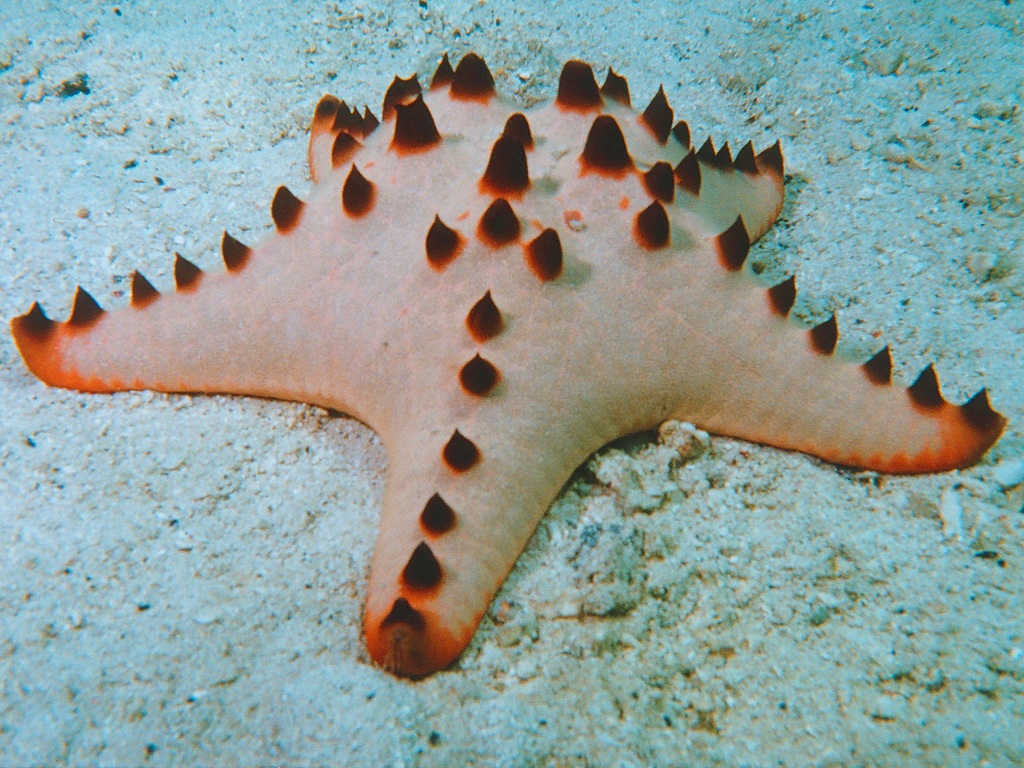
Horned Starfish
Kingdom:Animalia
Phylum:Echinodermata
Class:Asteroidea
Order:Valvatida
Family:Oreasteridae
Genus:Protoreaster
Species:P. nodosus
Granulated Sea Star

Sea Cucumbers
Kingdom:Animalia
Phylum:Echinodermata
Class:Holothuroidea
Order:Aspidochirotida
Family:Holothuriidae
Genus:Holothuria
Species:Holothuria pardalis

  • They have endoskeleton which means that their skeleton is on the inside.
  • Echinoderms have no body segments
  • Also the have radial symmetry ( which means it has more than 2 lines of symmetry).

Video Link (:


Thursday, March 3, 2011

Signs of Spring (:

 On the first stop of our outdoors adventure, we stopped at the perimeter of the feild. It was very sunny outside and I could feel the hot sun on my skin but from the trees at the wood line casted a shadow and made it chilly. In a distance you could hear birds chirping. The sign of spring I saw was the Honeysuckle growing on this plant.
Also this is another sign of spring I found at the first stop on our outdoor advetnure. This sign was buds sprouting out of the tree.
The second stop on our outdoor adventure was the shoreline of the pond. The sign of spring I found there was a little tree's buds starting to sprout out. It was very windy outside which made it were chilly. You could hear the leaves and trees swaying together from the wind. Even though it was 43 degrees outside, from the wind chill it felt like it was 32 degrees.
 The third stop on our adventure we stopped at that other side of the pond. For one sign of spring, I found a tree sprouting buds. Another sign of spring I found was a Alder Catkins tree, giving of pollen. It was still really windy outside. And we were near the bus garage so we heard moving vechiles and backing up beeps.
The last stop on our outdoor adventure was outskirts of the road leading to the bus garage. There I found another vine that had Honeysuckle growing on it. It was still very windy outside. The wind made it very chilly outside. But the sun was shining and there were no trees around us casting shadows so the sunlight was warm against my skin.

(All pictures taken by Brittany Henslee)

Bioflim Smulation at the G.C Marine Reserve


Dear Momma (:
Today in class Mrs. Richardson had us do a exciting lab. Of course it was going to be good because it invovle food but also it was fun becuase it a good way to learn new materal.

First she had us read over lab to make sure we understood everything we were doing. The graham cracker represented the biofilm plate which is something that a bunch of life in the ocean can settle on. These biofilm plates are used to collect organism. Then we spread icing on the graham cracker which represent a type on slim that is placed on the biofilm plate so that organism can stay attached to the plate. Next we placed a Life Saver onto the middle of the graham cracker to represent that bolt that would be used on the bioflim plate to make sure it does not move and it attached to the subtrate. Now we used red sugar crystals as red coralline algae, brown long johns as diatoms, rainbow sprinkles and marshmallows as barnacles, rainbow long johns as coral and blue or dreen dots as oysters. We sprinkled each organism over the graham cracker on at a time. This way it shows you how when the organism in the ocean land on the biofilm plates it is all at random.


Now that we had all the organisms on the graham cracker I placed marshmallows on to represent the barnacles when they grow up.
The reason Mrs. Richardson had us do this lab is to show us all the diveristy in zonations and how they are always changing.
(All pictures taken by Brittany Henslee)